
Journal·April 24, 2026·stargazing · things-to-do · sedona-at-night · local-guide · no-gear-needed
Sedona Stargazing: Where to Go and When (No Telescope Needed)
Sedona's dark skies are one of its best-kept secrets, and you don't need any gear to make the most of them

Most people come to Sedona for the red rocks. They leave talking about the stars.
I've lived here long enough to know that the night sky is genuinely one of the town's underrated attractions — not in a "check the box" way, but in the way where you lie down on the hood of your car and lose an hour without noticing. Sedona sits at around 4,500 feet elevation, the air is dry, and once you get even a half-mile from the main drag, the light pollution drops fast. You don't need a telescope, an app, or a tour guide. You need to know where to park and when to go.
When the Sky Actually Delivers
The short answer: new moon nights between April and October. The longer answer is that Sedona has clear skies roughly 300 nights a year, but summer monsoons (mid-July through September) bring cloud cover that can block things out completely. My favorite window is late spring — May and early June — before the monsoons and after the cold. Temperatures at elevation after dark can still surprise people in spring, so bring a layer even if the afternoon was 80 degrees.
Winter nights are cold and sometimes snowy, but when they're clear, they're extraordinary. The Milky Way core isn't visible in winter, but Orion, the Pleiades, and Jupiter-bright planets can be wild against a moonless sky.
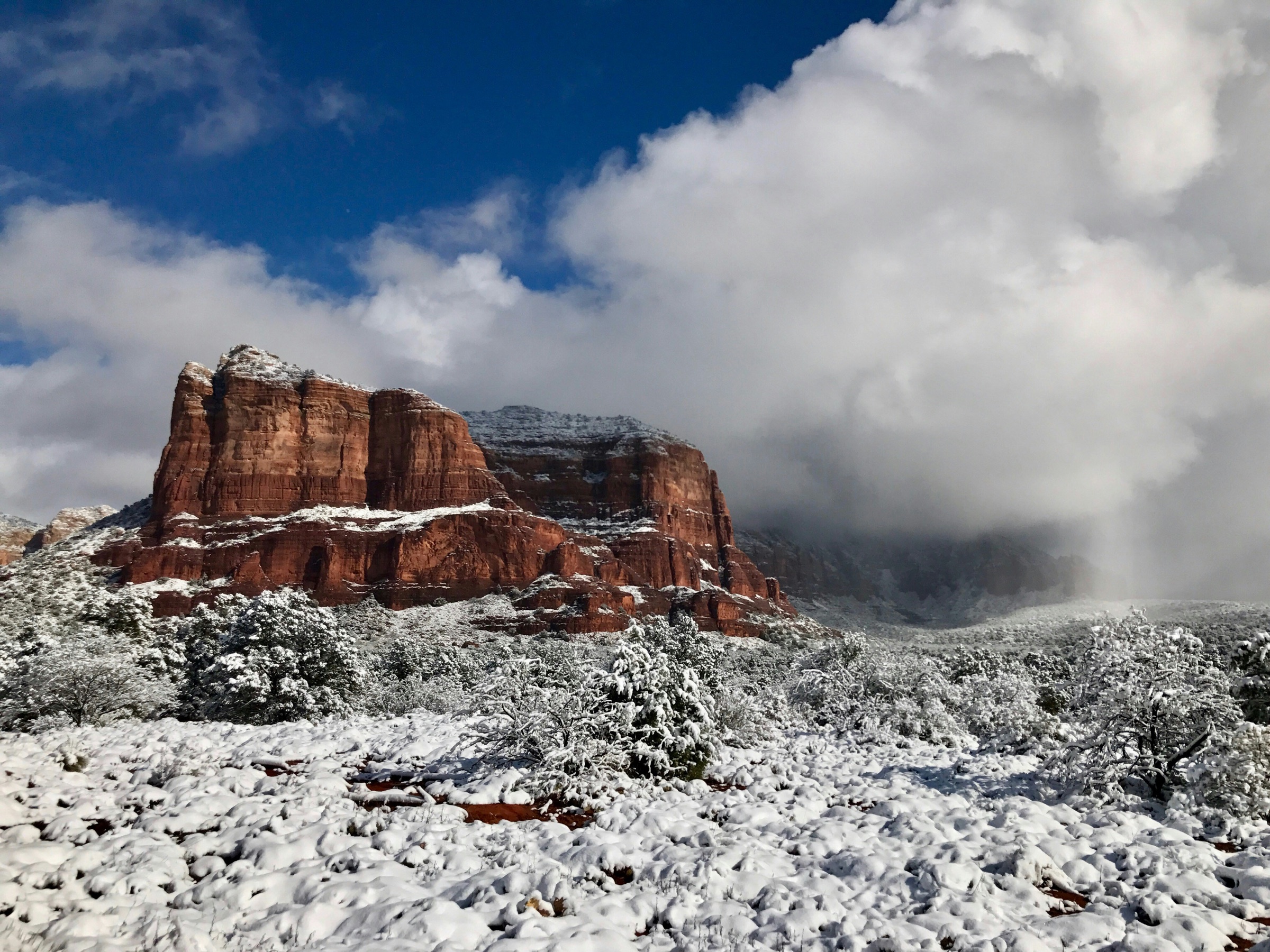
A clear winter night after snow is one of the quieter, darker times to be out — most tourists have gone home and the sky rewards the timing.
Best Spots Near Uptown
If you're staying in one of my Uptown places, you can actually see decent stars from the back porch on a good night — the neighborhoods sit above most of the commercial lighting on 89A. But if you want the real thing, here are three spots I actually use.
Airport Mesa is the closest legit dark-sky overlook to Uptown. Drive up Airport Road and park at the lower pullout (the upper lot has more light from the restaurant). From the lower pullout, you're looking south across an unobstructed valley. It's about a 7-minute drive from my Uptown properties. The one catch: it's popular, and you'll sometimes share it with other people.
Schnebly Hill Road is better if you want solitude. Drive out a mile or two past the pavement and pull over. It's rocky and your car will thank you for going slowly, but once you stop, you've got red rock silhouettes in every direction and almost no light below. I wouldn't do this road in a low-clearance vehicle at night.
The Chapel area — out near my wellness casita — is naturally darker because it's south of town and zoned differently. The parking area for the Chapel of the Holy Cross closes at night, but the road itself has pullouts with good eastern exposure. If you're staying near Chapel Hill, just walk outside after 9pm and look up.
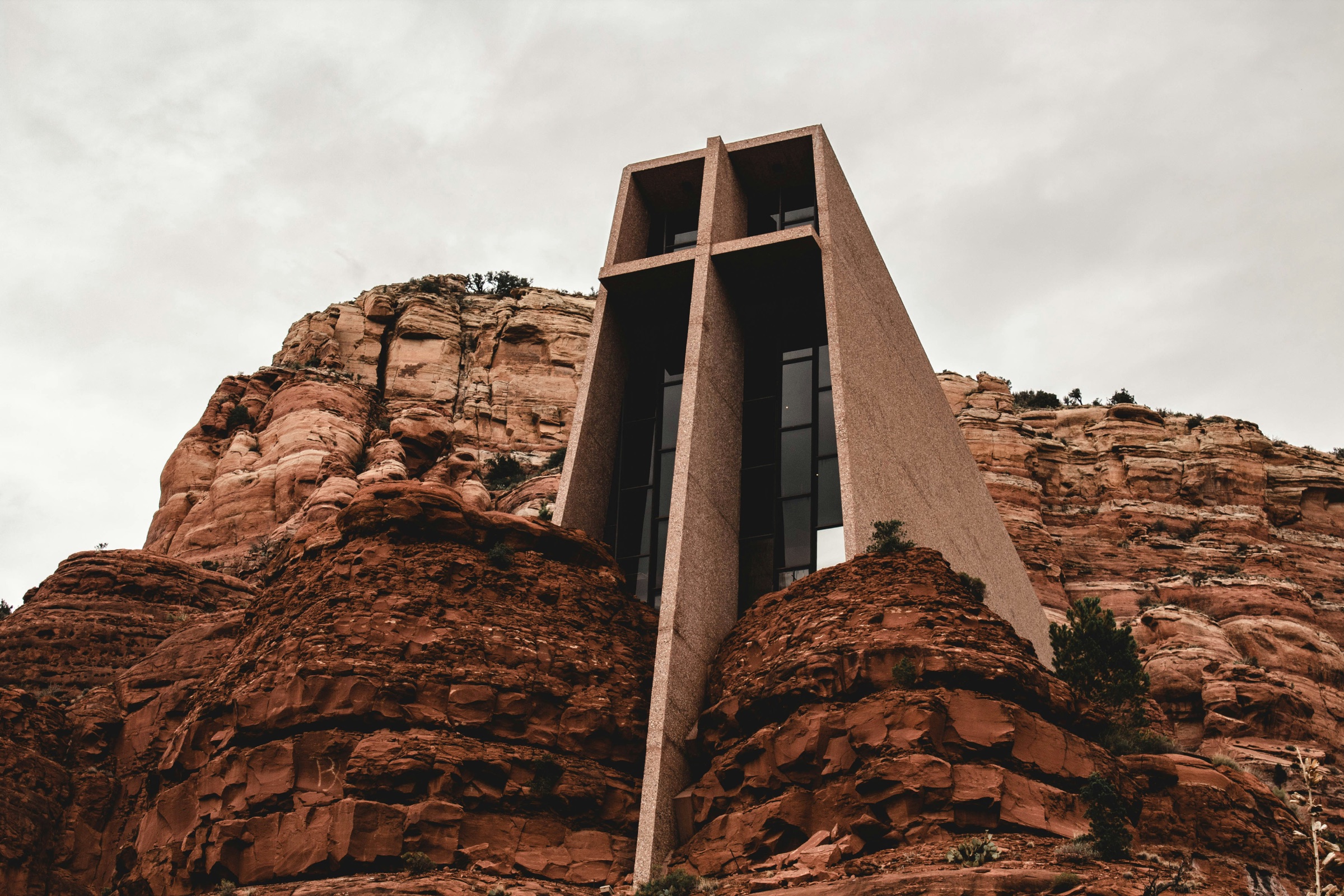
During the day this area draws hundreds of visitors. After dark it goes nearly silent — and the sky opens up to the east.
What You'll Actually See (No Equipment)
On a good moonless night from any of the spots above, you'll see the Milky Way core from late April through September — it rises in the southeast and arcs overhead by midnight in peak summer. You'll also pick up planets with the naked eye easily (anything that doesn't twinkle is probably a planet), and satellite passes are frequent enough that you'll spot several in an hour without trying.
Shooting stars are common on any clear night, but if you can time a trip around the Perseid meteor shower (peaks around August 11-13 each year), that's worth planning around. I've counted 40-plus meteors an hour lying out on Schnebly Hill during a good Perseid peak.
One practical note: give your eyes 15-20 minutes to adjust. Don't use your phone flashlight if you can avoid it. Red light (some headlamps have a red mode) preserves your night vision. It sounds like a small thing and it makes a real difference.
Don't Overthink It
You don't need a star map, a tour, or a $400 tripod. The best stargazing I've had here was completely spontaneous — pulled over on the way back from dinner because the sky looked interesting.
If you make it out to Airport Mesa on a clear May night, stay longer than you think you need to. That's when it gets good.
Notes from Sedona
Want these in your inbox?
Once a month I send the new posts straight to subscribers. Skip checking the site.