
Journal·August 18, 2026·photography · golden-hour · outdoor-activities · sedona-tips · hiking
Where to Actually Be in Sedona When the Light Goes Golden
Golden hour in Sedona lasts maybe 20 minutes, so knowing exactly where to stand before it starts makes all the difference

Golden hour in Sedona is not subtle. The red rocks go from rust to something closer to ember, and the shadows stretch long across the canyon floors. You have maybe 20 minutes of peak light — less if clouds roll in from the west — so wandering around hoping to find a good angle isn't a strategy. These are the spots I send guests to, with specific enough directions that you don't waste half of it in a parking lot.
Airport Mesa Overlook (Go Earlier Than You Think)
This is the one most photographers already know about, which means the small pullout on Airport Road fills up fast. I tell guests to be parked by 5:45 PM in summer, earlier in fall and winter. The overlook faces southwest, so you're watching the light hit Cathedral Rock and the formations along Oak Creek Canyon in the distance.
What people don't realize: the better compositions are actually 100 yards back down the road from the main overlook, where there are some juniper trees you can use for foreground interest. The crowd clusters at the railing. Walk the other way.
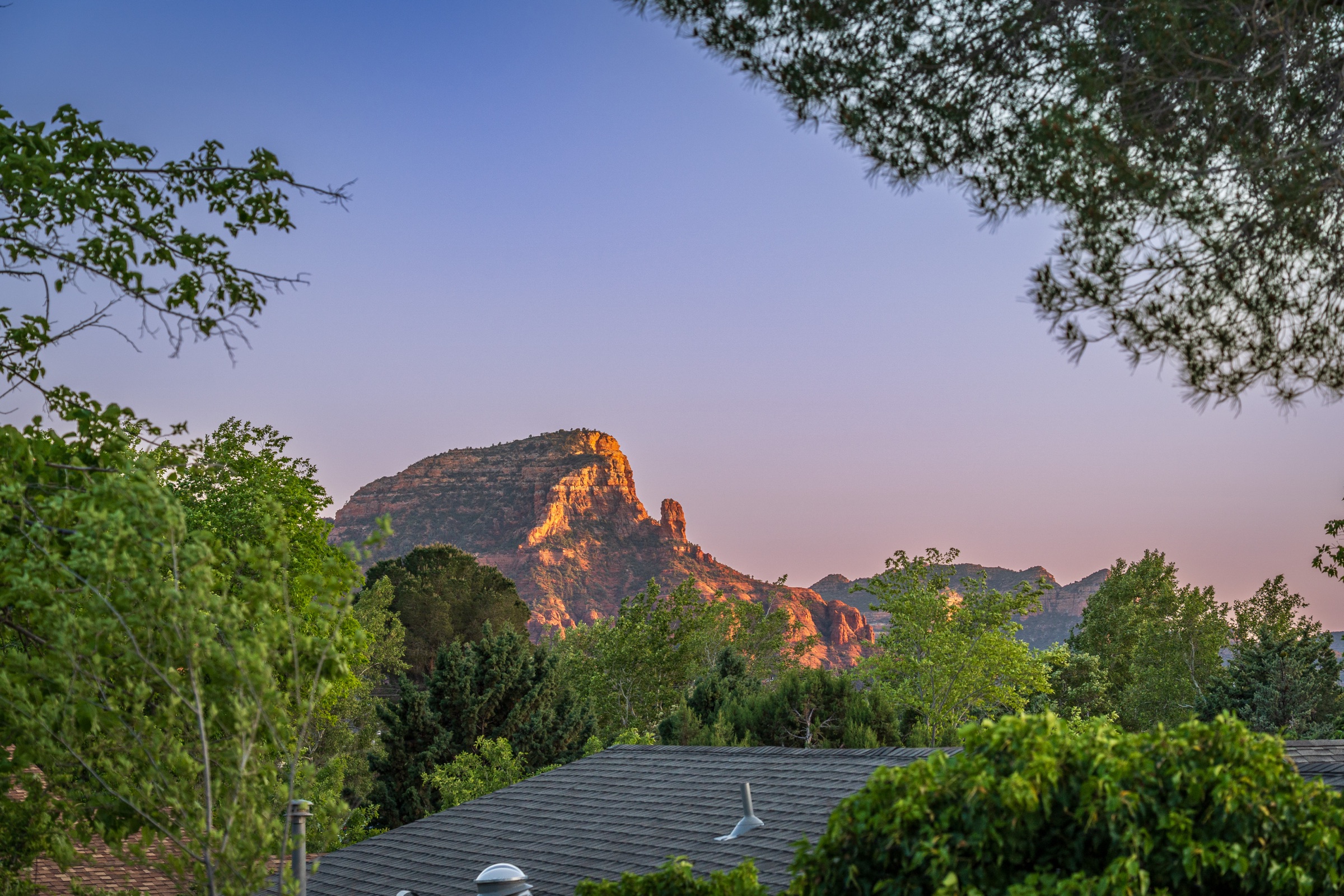
The kind of foreground framing you find when you step away from the main overlook crowd — juniper branches, warm light, no guardrails in the shot.
Cathedral Rock from Red Rock Crossing
This is the classic Sedona shot — Cathedral Rock reflected in Oak Creek — and it earns that status. The crossing is about 4 miles from Uptown, off Upper Red Rock Loop Road. There's a day-use fee for the Crescent Moon Recreation Area ($11 last I checked, cash or credit card at the kiosk).
The reflection only works when the creek is calm and relatively full, which usually means late spring through early summer, or after a good monsoon rain in August. In a dry October, the creek can be low enough that the reflection is mediocre. Worth checking recent photos online before you drive out.
Get low. Most people stand at normal height and get okay photos. Crouch down or find a flat rock right at water level and the reflection fills the frame properly.
Bell Rock from the North Side
Bell Rock is right off Highway 179 near the Village of Oak Creek, about 6 miles south of Uptown. Most people photograph it from the parking area or walking the main trail loop, which puts the sun behind you in the afternoon — fine for the rock itself, but flat.
For golden hour specifically, walk north on the Bell Rock Pathway about a quarter mile until you can frame Bell Rock against the western sky. Now the light is sidelighting the formation instead of washing it out, and you get those sharp shadow lines that define the shape.

Bell Rock holds its shape and color longer into evening than most formations — worth staying past golden hour if you want to try night photography from the same spot.
The Uptown Overlook Nobody Mentions
There's a small pullout on Schnebly Hill Road, less than a mile up from the 179 intersection, that looks back over the whole Uptown area and down the canyon. It's not on any photography list I've seen, which is its main advantage.
At golden hour, you're shooting west-northwest, so the formations behind Uptown catch side light while the canyon below goes into warm shadow. It also gives you a sense of scale — the town looks small against the rock — that the closer-in spots don't show.
Schnebly Hill Road is unpaved past a certain point and gets rough, but the pullout I'm describing is before the road deteriorates. Any car can make it.
A Note on Crowds and Timing
Weekends from March through May, and again September through November, are the hardest. The Airport Mesa overlook in particular can feel like a concert venue. If you're here mid-week, or willing to go in July when it's hot and fewer people visit, you'll have the good angles to yourself.
Also worth knowing: the light quality on partly cloudy days is often better than clear days. A clear sky gives you a clean shot, but some high clouds catch the orange and scatter it across the whole scene. Some of the best light I've seen here came 10 minutes before a storm moved through.
If you make it to Red Rock Crossing on an evening when the creek is still and the clouds are doing something interesting above Cathedral Rock, take more photos than you think you need. That one you almost didn't take is usually the one you'll keep.
Notes from Sedona
Want these in your inbox?
Once a month I send the new posts straight to subscribers. Skip checking the site.