
Journal·April 12, 2026·seasons · visitor-guide
The Best Time to Visit Sedona: A Local's Honest Breakdown by Season
A Sedona local breaks down every season — weather, crowds, prices, and what you'll actually experience — so you can pick the right time for your trip.

People ask me this constantly: when's the best time to visit Sedona?
The honest answer is that it depends on what kind of trip you're after. I've hosted guests in every month of the year, and I've watched people have transformative experiences in February and miserable ones in May — and vice versa. The red rocks don't care about the calendar. But your experience absolutely will be shaped by when you show up.
Here's my season-by-season breakdown, from someone who actually lives here.
Spring (March–May) — The Popular Choice, for Good Reason
Spring is Sedona's peak season, and for obvious reasons. Temperatures are comfortable — highs in the mid-60s to low 80s — wildflowers are blooming along the trails, and the light is extraordinary. If you've seen the iconic Sedona photos that make people book a trip, most of them were taken in March or April.
The trade-off: everyone else knows this too. Spring brings the largest crowds of the year, especially around spring break and Easter. Trailhead parking lots fill by 8 a.m. Restaurants have waits. The one-lane 179 into town gets backed up all the way to Chapel. Uptown gets busy enough that it can feel more like a theme park than a quiet red rock getaway.
If you're coming in spring, book early — both accommodations and restaurant reservations. And plan to start your hikes before 7:30 a.m. if you want the trails mostly to yourself.
Best for: First-time visitors, wildflower hikers, couples wanting the "classic Sedona" experience, anyone who doesn't mind trading some solitude for ideal weather.
A Word on Getting Around During Busy Season (That Most Visitors Learn the Hard Way)
If you're visiting during peak season, Sedona's traffic deserves its own mention — specifically the Y, the main roundabout intersection where Highway 89A meets Highway 179. In spring and holiday weekends, it backs up significantly.
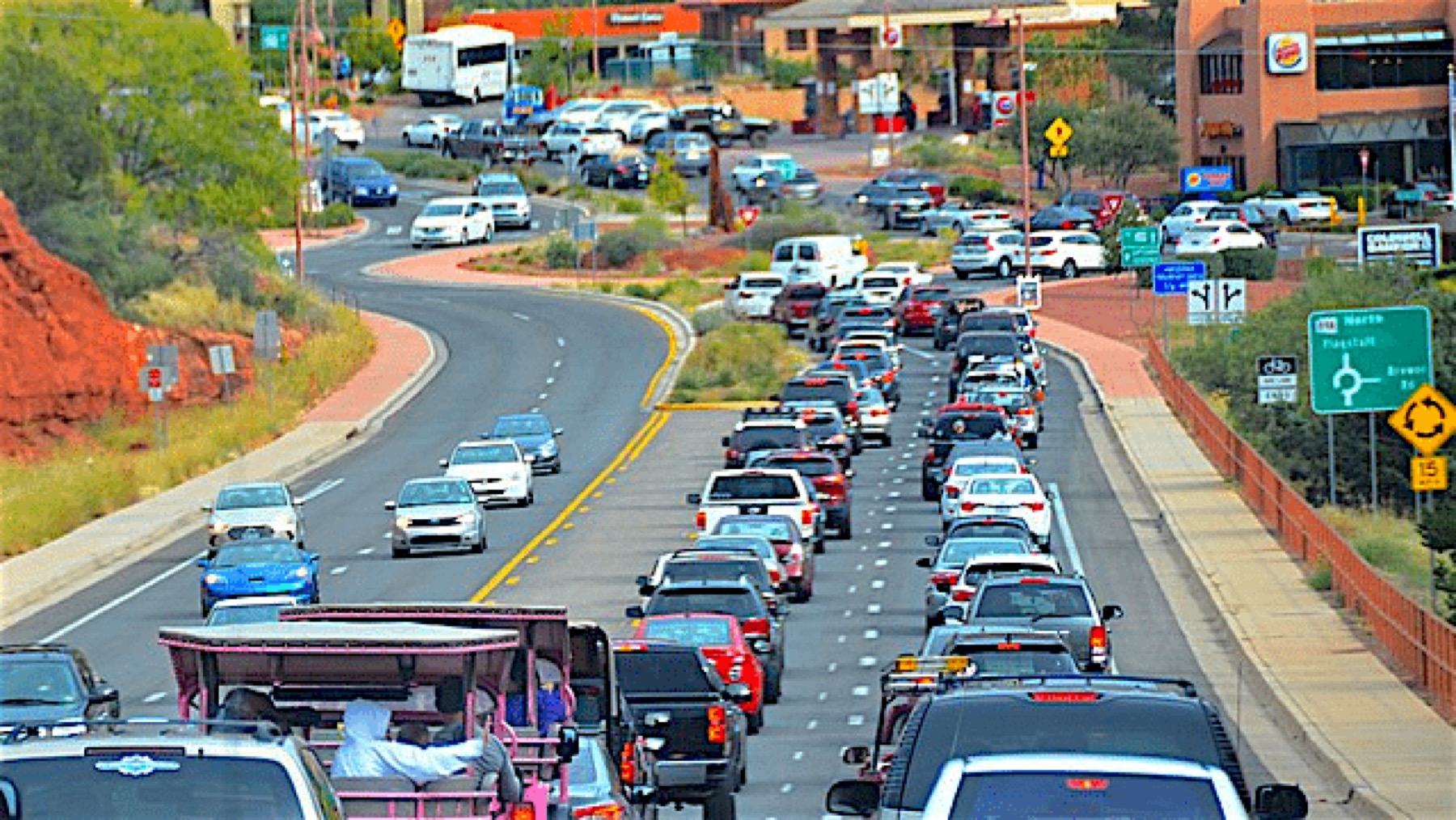
Peak season at the Y — the main intersection connecting Uptown, West Sedona, and Highway 179. Plan around it and you'll save yourself real time.
A couple of local tips that'll save you:
- West Sedona to Uptown: Skip the Y entirely. Take the Forest Road entry into Uptown — most visitors don't know it exists yet, and it bypasses the backup completely.
- Headed south toward the Village of Oak Creek: When you approach the Y, get in the left lane. It moves meaningfully faster than the right and routes you cleanly south on 179.
My honest preference during busy season? I don't drive at all during peak hours. If you stay in Uptown — which is where two of my three properties are — you can walk to dinner, galleries, coffee, and most of what makes Sedona worth visiting. It's one of the underrated advantages of an Uptown location that doesn't show up on the listing page.
Summer (June–August) — Underrated, If You Know What You're Getting Into
June is hot. Genuinely hot — highs regularly hit 100°F or above. Most visitors skip it, which means trails are quieter, prices drop, and Sedona has a slower, more local feel.
Then something interesting happens in July: the monsoons arrive. Almost every afternoon, thunderstorms roll in from the southeast, dropping temperatures 15–20 degrees and painting the red rocks against purple-black clouds. It's one of the most dramatic weather patterns I've ever seen, and if you're a photographer, it's genuinely unbeatable. Mornings are clear, evenings are theatrical.
Summer is also when I'd most recommend the Casita's cold plunge. There's something unusually satisfying about plunging into cold water after a hot desert morning, then soaking in the hot tub as a monsoon rolls in over the ridge.
Practical notes: hike early (on the trail by 6 a.m. in June and July), bring more water than you think you need, and have a plan if lightning shows up on an exposed trail.
Best for: Budget travelers, photographers, repeat visitors who want a different side of Sedona, anyone who doesn't mind heat in exchange for privacy and lower prices.
Fall (September–November) — The Local Favorite
Ask most full-time Sedona residents when they love it most and they'll say fall without hesitating. September and October hit a sweet spot: the monsoon humidity has cleared, temperatures drop back into the 70s and 80s, and the summer crowds have thinned out. The light in October is some of the best of the year — golden hour on the red rocks in mid-October is genuinely hard to describe.
November gets cooler and quieter still. Cottonwood and sycamore trees along Oak Creek turn yellow and orange, which isn't Vermont foliage, but it's beautiful in its own high-desert way. Thanksgiving week brings a crowd, but most of November feels peaceful.
This is peak season for wellness guests at the Casita — the hot tub and sauna hit differently when there's a chill in the evening air and stars overhead.
Best for: Repeat visitors, hikers who want ideal temps without spring crowds, wellness-focused trips, anyone who asked a local first.
Winter (December–February) — The Underdog Season
Winter is Sedona's best-kept secret and I'll push back on anyone who says it's a bad time to visit.
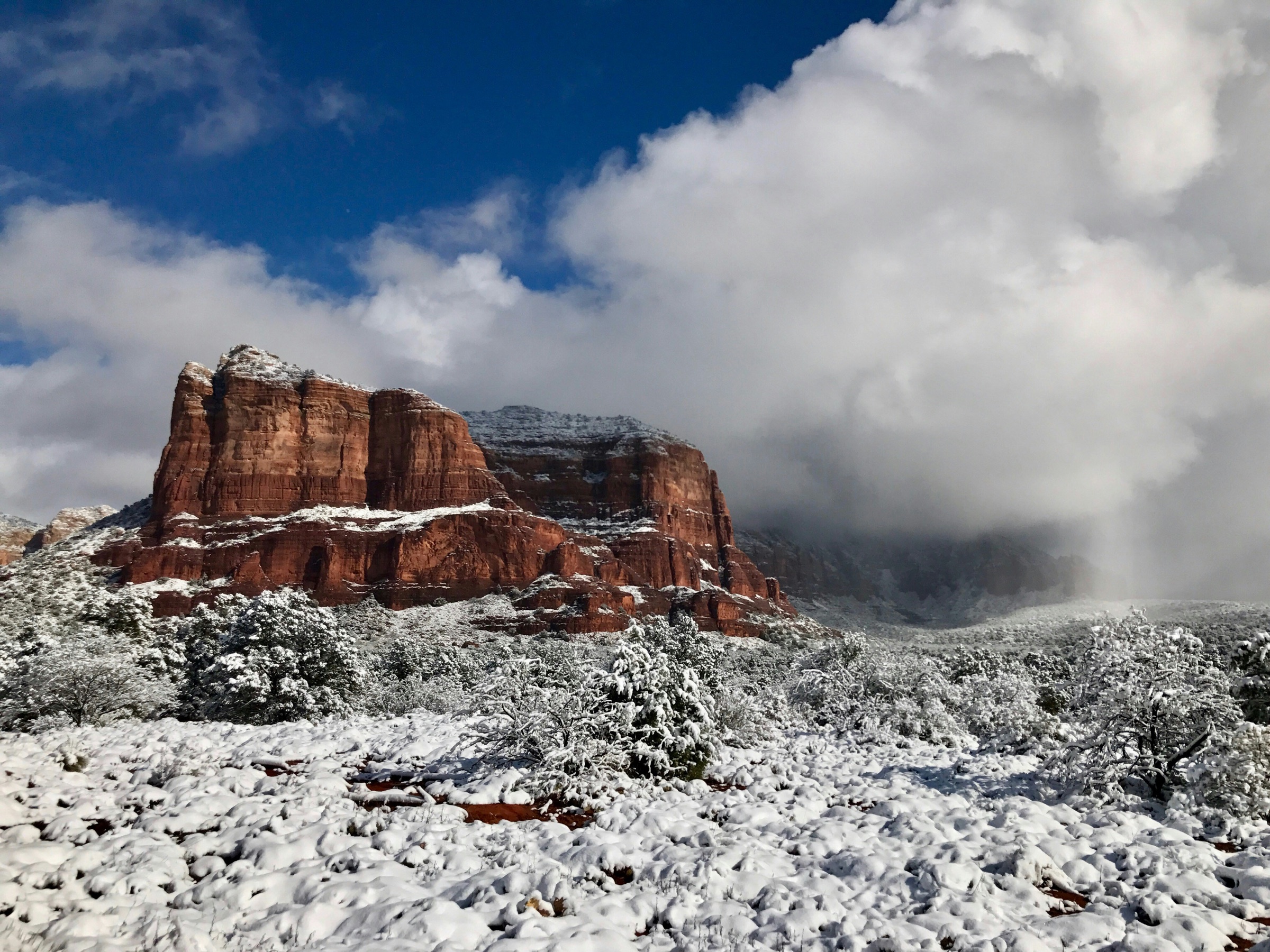
Yes, mornings are cold — temperatures regularly dip into the 30s overnight and lows can get close to freezing. But afternoons are often mild (50s–60s), the sky is a deeper blue than any other season, and the trails are nearly empty. A light snowfall on the red rocks — which happens maybe two or three times a year — is one of the most stunning things you'll ever see.
The quieter energy suits certain kinds of travelers perfectly. If you're coming to decompress, write, practice yoga, or simply slow down, January in Sedona is extraordinary. The town still has great restaurants and galleries; it just doesn't feel like you're competing with everyone else to enjoy them.
Accommodation prices are at their lowest. The Casita's sauna and hot tub were practically designed for winter evenings — there's something about soaking under a cold, star-filled Arizona sky that you won't find anywhere else.
Best for: Solo travelers, couples on a genuine retreat, anyone who values quiet over warmth, budget-conscious visitors willing to layer up.
The Short Version
| Season | Crowds | Prices | Weather | Best For |
|---|---|---|---|---|
| Spring | High | High | Perfect | First-timers, hikers |
| Summer | Low | Low | Hot / dramatic | Photographers, budget travelers |
| Fall | Medium | Medium | Excellent | Locals' pick, wellness trips |
| Winter | Low | Low | Cold but clear | Quiet retreats, stargazing |
There isn't a wrong time to visit Sedona. There's just the right time for your trip. If you want a recommendation based on what you're looking for — active adventure, a couples getaway, a solo reset, a family trip — feel free to reach out. I've hosted guests across every season and I'm happy to help you find the best fit.
A note on shoulder weeks: the two quietest, best-value windows of the year are the first two weeks of December (before holiday travel picks up) and the first two weeks of September (after summer, before fall peak). If your schedule is flexible, those windows are gold.
Notes from Sedona
Want these in your inbox?
Once a month I send the new posts straight to subscribers. Skip checking the site.